Where to find every Life Orientation past paper and memo

Download official Life Orientation papers and memos from the Department of Basic EducationExaminations/NSCPastExaminationpapers.aspx) or from PapersZA’s free, no-account grade pages, then start practising immediately. Grab one paper and its matching memo today, set a timer, and write it under exam conditions before you read another word of study advice. Everything else in this guide just makes that first paper more useful.
TL;DR:
- Practising with at least two to eight timed past papers, including full exam conditions, is essential for building pacing and confidence.
- Always verify that the papers match the current syllabus, session, and language version to ensure accurate preparation.
- Using the memo to self-mark reveals specific examiner expectations and highlights recurring weak areas, improving answer structure and phrasing.
- Focus on applying concepts to real current events in answers to boost marks, but ensure examples support your key points and fit the question.
- Incorporate short, focused revision sessions on weak topics and simulate exam time regularly to develop discipline and exam stamina.
Table of Contents
- Where to download official Life Orientation papers and memos
- How to practise with past papers and memos step by step
- Grade 12 CAT versus Grade 9 revision: what to focus on
- A simple checklist and scoring method to track progress
- Why trust this guide: sourcing and study standards
- Why memos matter more than the paper itself
- What the Life Orientation curriculum actually covers
- Building a study plan that actually fits Life Orientation
- How to read Life Orientation question types correctly
- Study resources worth adding alongside past papers
- Working current events into your exam answers
- Common mistakes that cost Life Orientation marks
- The most overlooked part of Life Orientation prep
- Download your Life Orientation papers and memos now
- Sources
- FAQ
Where to download official Life Orientation papers and memos
Two sources cover almost everything a South African learner needs. Knowing what each one is good for saves you from downloading the wrong file the night before a test.
The DBE hosts the official NSC past examination papers going back to 2008, organised by year and exam session. These are the primary-source documents, exactly as they were printed for the exam room, and every memo is the department’s own marking guideline. The catch is navigation: papers are grouped by year first, so you often click through several folders before you land on the right subject and session.
PapersZA works differently. It’s built as a searchable library, so instead of digging through year folders, you go straight to a subject and grade page. The Life Orientation Grade 12 page and the Grade 9 page list papers with their memos sitting right next to them, no account or sign-up required. That structure matters more than it sounds. When you’re revising three subjects in one evening, the time you save not hunting for files is time you actually spend practising.
Before you commit to a paper, run through this short check:
- Confirm the session. June, September, and November papers cover different content depth. Term-end CATs are shorter than the November NSC paper.
- Match the language version. DBE publishes English and Afrikaans versions; download the one you’ll actually be examined in.
- Verify the memo pairs with the paper. A mismatched year or session memo will teach you the wrong mark allocation.
- Check the year is current enough. CAPS content shifts slightly over the years, so lean on papers from the last five to six years where possible.
How to practise with past papers and memos step by step
Downloading a paper does nothing on its own. The value comes from how you use it, and South African exam-prep guidance is consistent on this: structured, active practice beats passive reading every time.
Here’s a routine that works whether you have one weekend or six weeks before the exam:
- Collect three to five papers that match your current syllabus and language, mixing sessions (June, September, November) so you’re not just memorising one paper’s pattern.
- Simulate real exam conditions. Set a timer for the full duration, sit somewhere quiet, and don’t look at notes. Treat it exactly like the real thing.
- Self-mark strictly using the memo. Don’t round up. If the memo wants two specific points and you gave one vague sentence, mark it as a partial answer, not a full one.
- Log every mistake. Write down which section and topic tripped you up, not just the mark you lost.
- Redo the same questions a few days later without the memo open. If you get them right the second time, the concept has stuck. If not, that topic needs more attention than a quick reread.
Marking your own paper against the memo also teaches you something subtler: examiner language. Life Orientation rewards a specific answer structure, especially in short essays and paragraph responses, and the format repeats across papers closely enough that you can predict roughly what a good answer looks like before you’ve finished reading the question.
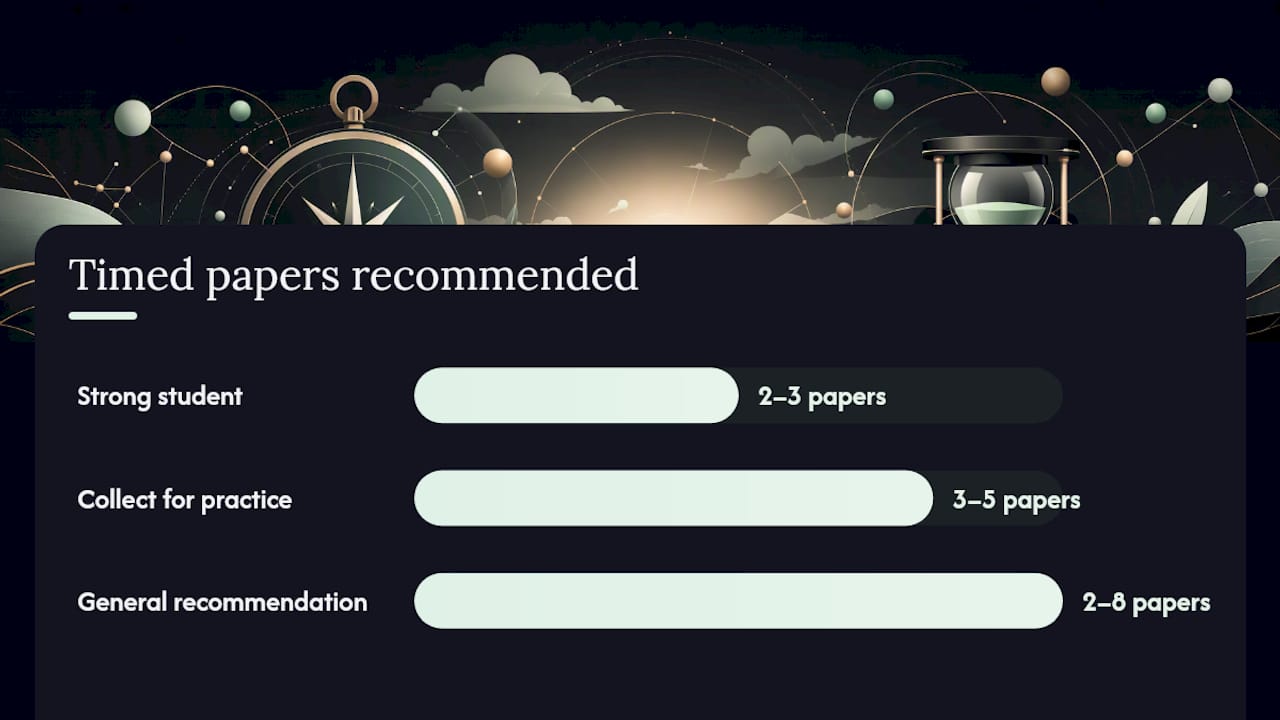
How many papers is enough? South African exam-prep guides generally recommend two to eight papers, depending on how confident you already feel. If Life Orientation is a strong subject for you, two or three timed papers plus a light review might be plenty. If it’s shaky, aim for the higher end and space the papers out so you have time to fix weak topics between attempts.
Pro Tip: Mark your own paper a day after writing it, not immediately. The distance makes you a stricter, more honest marker than when you’re still feeling good about having finished on time.
Grade 12 CAT versus Grade 9 revision: what to focus on
The exam format is different enough between the two grades that your practice strategy should shift too.
Grade 12’s Common Assessment Task follows a fixed shape: three sections, 100 marks total, written over two and a half hours. Section B is typically compulsory and includes essay-style or extended paragraph responses, which means timing discipline matters as much as content knowledge. If you consistently run out of time in Section C, that’s not a content problem, it’s a pacing problem, and only full timed practice fixes it.
Grade 9 assessments are shorter and lean more heavily on definitions, short answers, and applying concepts to everyday scenarios. At this level, the priority isn’t exam stamina, it’s getting comfortable with the vocabulary examiners use and consolidating topics you’ve only half learned during the term.
Quick access points, depending on where you are:
- Either grade: if your written answers feel clumsy, borrowing an English Grade 10 paper for paragraph-structure practice can sharpen how you phrase Life Orientation responses too.
A simple checklist and scoring method to track progress
You don’t need a complicated system to see whether your practice is working. You need consistency and a way to look back at three weeks of scores and actually notice a pattern.
Run each practice session the same way:
- Download the paper and its memo together, and confirm they match.
- Set a timer for the full official duration, no exceptions.
- Write the full paper under quiet, exam-like conditions.
- Mark it yourself against the memo, point by point.
- Write down which topics cost you the most marks.
- A few days later, redo only those weak-topic questions from memory.
Keep a simple log with five columns: date, paper (year and session), score out of 100, weak topics, and time taken to complete it. It takes thirty seconds to fill in after each session, and after four or five entries you’ll see exactly which topics keep costing you marks, which is far more useful than a vague feeling that “Life Orientation is fine.”
Aim for five to eight papers if you’re building confidence from a shaky base, or two to three if you’re already scoring comfortably, always including at least one fully timed, no-notes paper every week leading into exams.
Why trust this guide: sourcing and study standards
This guide leans on two categories of source, and it’s worth being clear about which claim comes from where. Anything about exam format, section structure, or official marking comes straight from DBE documentation, including the department’s own exam-preparation guidance. Anything about how PapersZA organises its library comes from the platform itself.
PapersZA hosts over 8,315 documents across grades 3 to 12, pulling from DBE, IEB, and provincial sources, all free to download with no account required. For Life Orientation specifically, that means dedicated grade pages with papers and memos sitting together rather than scattered across separate archive folders.
… Where this guide makes a study-technique recommendation rather than a factual claim about exam format, it’s built on the practical routines that South African exam-prep resources consistently recommend, not a single anecdote.
Why memos matter more than the paper itself
A past paper without its memo is barely half a study tool. You can guess at how well you did, but guessing is exactly the habit that leaves learners overconfident walking into the real exam.
The memo tells you three things a paper alone can’t: the exact mark allocation per point, the phrasing examiners are trained to accept, and where partial marks apply. Life Orientation answers often hinge on specific keywords or a required number of distinct points, not just a “roughly right” answer. Without the memo, you have no way of knowing whether your paragraph on coping with stress hit two of the three required points or all three.
Self-marking with the memo also exposes a pattern most learners miss: repeated loss of marks in the same section. If you keep losing points in the same block, whether that’s the compulsory Section B extract questions or a specific life-skills topic, that’s not bad luck. That’s a study gap the memo just made visible.
Treat the memo as a second teacher, not an answer key to check after the fact. Read it before you attempt similar questions again, note the exact phrasing it rewards, and try to mirror that structure the next time a similar question comes up. That habit, more than any amount of extra reading, is what moves marks upward between one practice paper and the next.
What the Life Orientation curriculum actually covers
Life Orientation isn’t one subject so much as several loosely connected life-skills topics stitched into a single exam. The CAPS curriculum groups content around a handful of core themes: personal wellbeing, social and environmental responsibility, careers and career choices, constitutional rights and democratic responsibilities, and physical education and movement.
Each theme carries its own learning outcomes. Personal wellbeing sections test your understanding of stress management, relationships, and lifestyle diseases (a topic that shows up repeatedly in past papers). Careers sections check whether you can connect subject choices to actual study or work pathways, not just recite definitions. The constitutional and democratic section leans on knowing how South Africa’s institutions function, from the Constitution’s basic structure to civic participation.
The physical education component is often underestimated because it feels less “academic,” but exam questions still test theory: training principles, safety practices, and how physical activity links to overall health.
What ties these themes together is application. Examiners consistently reward answers that connect a concept to a real, specific scenario rather than a generic definition. That’s precisely why past papers matter so much here: they show you exactly which themes repeat and how examiners phrase questions around them, session after session.
Building a study plan that actually fits Life Orientation
Cramming works badly for Life Orientation because the subject spans so many unrelated themes. A plan spread across weeks, not days, gets far better results.
Start by mapping the curriculum themes against the weeks you have left. If you have six weeks, give each major theme its own dedicated session rather than trying to cover everything in one long cram night. Life Orientation rewards breadth of recall across topics, so a scattered plan beats a deep-but-narrow one.
Alternate between two session types. Full timed papers test pacing and stamina under real conditions. Shorter, focused sessions of around twenty to thirty minutes let you drill a single weak topic, like constitutional rights or lifestyle diseases, without the fatigue of a full paper. Mixing both keeps you motivated while still covering ground efficiently.
Block out revision time close to when you’ll actually be examined, and treat the final week differently from the rest. Use it mostly for redoing flagged weak-topic questions and one final timed paper, rather than introducing brand-new content you haven’t touched before. New material this late tends to create anxiety without adding real marks.
Keep sessions short enough that you finish each one focused rather than exhausted. Fifty minutes of sharp, timed practice beats three distracted hours every time, and it’s easier to actually stick to a study plan you don’t dread starting.
How to read Life Orientation question types correctly
Life Orientation questions fall into a fairly small number of recurring formats once you’ve seen enough past papers, and recognising the format fast saves you time in the exam itself.
Multiple-choice and matching questions test recall directly. Read every option before selecting one; Life Orientation papers occasionally include a “most correct” answer among several plausible ones, and rushing costs easy marks here.
Extract-based questions give you a short passage, often a news scenario or case study, followed by several questions. These test whether you can apply a concept to a specific situation rather than just define it. Reread the extract itself before answering, since the answer is frequently sitting inside the wording of the passage.
Short paragraph and essay-style questions carry the most marks and the most risk. Sample papers show these consistently require structured responses with a clear introduction, a set number of distinct points, and a brief conclusion. Examiners generally allocate marks per distinct point made, not for length, so a tightly written answer with five clear points outperforms a rambling one with the same information buried inside it.
Practising with past papers is the fastest way to internalise which format you’re facing before you’ve even finished reading the question stem.
Study resources worth adding alongside past papers
Past papers are the core of exam prep, but they work best alongside a small set of supporting resources rather than in isolation.
A current CAPS-aligned Life Orientation textbook fills in background knowledge that a past paper alone won’t teach you, especially for newer curriculum topics you haven’t covered in class yet. Check with your teacher which textbook matches your province and year, since editions occasionally shift content slightly.
Study guides built specifically around the exam (rather than general textbooks) tend to summarise themes into revision-friendly chunks, which is useful in the final two weeks when you’re consolidating rather than learning from scratch.
Online video explainers can help with topics that feel abstract on paper, like constitutional structures or specific training principles in the physical education section. Watch these to build understanding first, then go back to a past paper question on that exact topic to test whether the explanation actually stuck.
None of these replace timed practice. Treat textbooks and study guides as the input that builds your knowledge, and past papers as the tool that proves whether that knowledge translates into exam marks under pressure.
Working current events into your exam answers
Life Orientation examiners regularly reward answers that connect theory to something happening in South Africa right now, particularly in sections on social responsibility, environmental issues, and constitutional rights.
Keep a short, running list of two or three recent local or national stories relevant to each major theme. For social responsibility, that might be a community initiative or a public health campaign you’ve heard about. For environmental topics, a local water-shortage story or a recycling drive works well. You don’t need deep knowledge of the story, just enough detail to use it as a concrete example rather than a vague reference.
When you write an answer, mention the example specifically rather than gesturing at it. “Recent water restrictions in several municipalities” reads as a real, applied example. “There are environmental problems in South Africa” reads as filler and won’t earn extra marks on its own.
Be careful not to force an example where it doesn’t fit. A current-events reference should support a point you’re already making, not replace the theoretical content the memo is actually looking for. Examiners are marking for correct concepts first; the local example is what lifts a decent answer into a strong one.
Common mistakes that cost Life Orientation marks
Most lost marks in Life Orientation come from a small, repeatable set of mistakes rather than genuine gaps in knowledge.
Underestimating the subject is the biggest one. Because Life Orientation feels conversational compared to a subject like Mathematics, many learners walk in without having practised a single full timed paper, and the pacing catches them out in Section C. Treating LO practice as seriously as any other subject tends to produce disproportionate mark gains precisely because so few learners bother.
Vague paragraph answers are the second big loss. Writing generally around a topic instead of hitting the memo’s specific required points leaves partial credit on the table even when the learner clearly understood the concept.
Ignoring instruction words is a quiet mark-killer. “Discuss,” “list,” and “explain” require different depths of response, and answering a “discuss” question with a one-line list loses marks the memo explicitly allocates for elaboration.
Running out of time on the final section, usually the essay or extended paragraph, is common enough that it deserves its own fix: practise full papers under strict timing specifically so you learn how many minutes each section actually needs, not how many minutes you assume it needs.
The most overlooked part of Life Orientation prep
Most study advice for this subject treats it as a memory test: learn the definitions, know your themes, you’ll be fine. That advice undersells how much Life Orientation actually rewards structure and examiner-specific phrasing over raw content knowledge.

The gap between a mediocre and a strong Life Orientation result usually isn’t what a learner knows. It’s whether they’ve seen enough real memos to know how examiners want that knowledge presented. A learner who’s written three timed papers and marked them honestly against real memos will often outperform one who’s read the entire textbook twice but never simulated exam pressure.
If you take one thing from this guide, prioritise the timed, self-marked paper over another round of passive reading. Download one now, whether from the DBE’s archive or PapersZA’s grade pages, and treat the memo as seriously as you’d treat feedback from a teacher marking your homework. That single habit, repeated consistently, closes more of the mark gap than any amount of extra textbook reading.
— Nkosi
Download your Life Orientation papers and memos now
There are other places to hunt for past papers, mostly scattered PDF archives or department folders organised by year rather than subject. Papersza takes a different route: a searchable library where you go straight to the subject and grade you need, memo attached, no account or sign-up required.
That matters most when you’re revising several subjects in one sitting and can’t afford to lose twenty minutes hunting for the right file. The Life Orientation Grade 12 page and Grade 9 page list papers by year and session, memo included, so you go from “I need to practise” to “I’m writing a timed paper” in under a minute. Papersza pulls from DBE, IEB, and provincial sources across more than 8,315 documents spanning grades 3 to 12, all free to download.
If you’re not sure how the search works, the how PapersZA works page walks through finding a paper and grabbing its memo in a few clicks. Otherwise, head to the PapersZA homepage and search your grade and subject directly. Download a paper, set a timer, and start your first timed practice today.
Sources
FAQ
Where can I download official Life Orientation past papers?
The DBE’s NSC past papers archive has official papers back to 2008, and PapersZA’s Life Orientation grade pages offer the same papers organised by grade with memos attached, no account needed.
Do I need to download the memo as well as the paper?
Yes. Without the memo you can’t self-mark accurately, and Life Orientation grading depends heavily on specific point allocation and required phrasing that only the memo shows.
How many past papers should I practise with?
South African exam-prep guidance generally suggests two to eight papers, depending on your confidence level, with at least one full timed paper every week leading into exams.
What is the format of the Grade 12 Life Orientation CAT?
The CAT typically runs three sections over two and a half hours for 100 marks, with a compulsory section that includes extract-based and short paragraph or essay questions.
Is PapersZA free to use for Life Orientation papers?
Yes, PapersZA offers free downloads of past papers and memos with no account or registration required, across grades 3 to 12.